
Quick answer
The best commercial cleaning service for your facility is one that can clearly define scope, show proof of insurance and compliance, provide references from similar building types, and give you a fixed-price proposal — not just an hourly estimate. Below is how to evaluate each of those criteria step by step.
1) Start with scope, not price
The most common mistake is comparing proposals before you've defined what "clean" means for your facility. Two vendors quoting the same building can deliver wildly different results if scope isn't locked down.
Before you contact any provider, document:
- Square footage by area type: offices, restrooms, lobbies, breakrooms, warehouses, and exterior common areas.
- Frequency expectations: daily, 3x/week, weekly, or monthly — broken out by task (trash, vacuuming, restroom restock, floor care).
- Special requirements: after-hours access, alarm codes, security protocols, restricted zones, or tenant-specific rules.
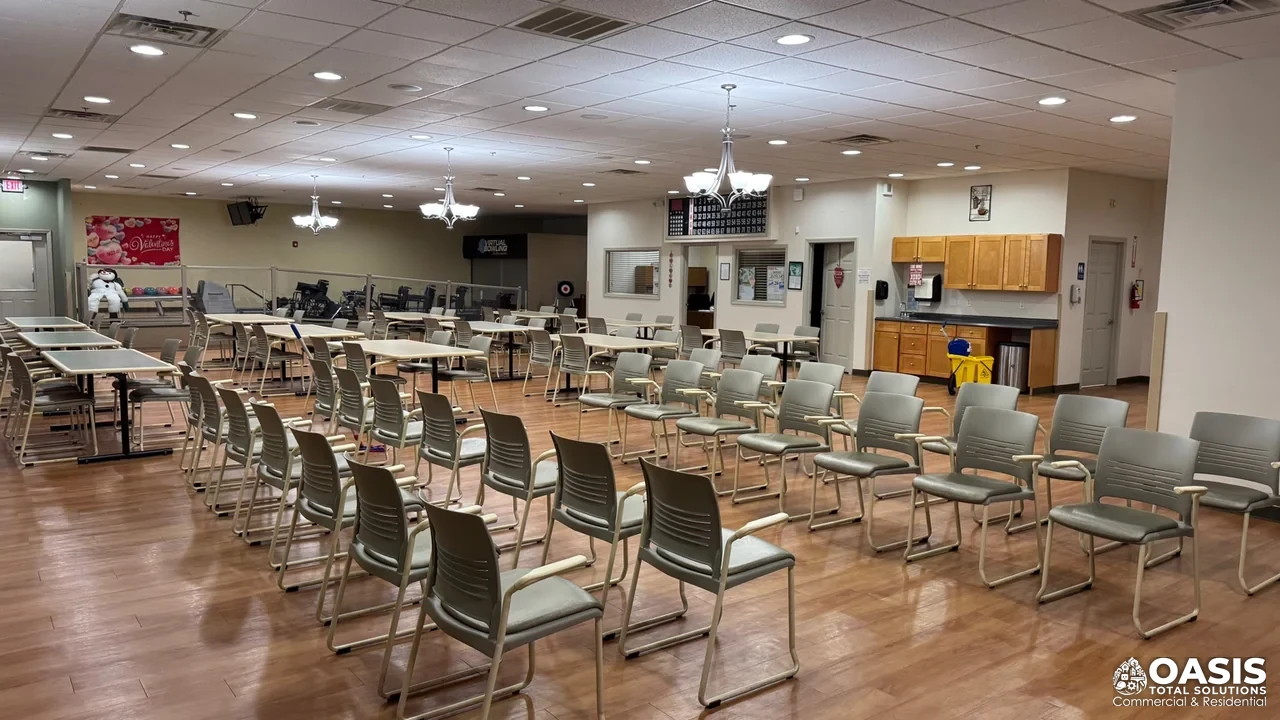
- Floor types and conditions: VCT, carpet, concrete, tile, hardwood — each requires different equipment and chemical programs.
2) What to look for in a provider
| Criteria | What to ask | Red flag |
|---|---|---|
| Insurance & compliance | Ask for a current Certificate of Insurance (COI) naming your property. Verify general liability, workers' comp, and bonding. | Provider cannot supply the required current insurance documentation before work or asks you to waive an agreed requirement. |
| Scope documentation | Request a written scope of work with task frequencies, area-by-area breakdown, and supply responsibilities. | Proposal is a single page with no task detail — just a monthly number. |
| References | Ask for 2-3 references from similar building types (office, medical, school, industrial). Call them. | No references available, or references are from residential clients only. |
| Staff & supervision | How are cleaners trained? Who supervises nightly crews? What's the process when someone calls out? | No on-site supervision, no backup plan for absences, or "we'll figure it out." |
| Quality assurance | Do they perform inspections? How often? Do you get reports or photos? | No QA process at all — quality depends entirely on the individual cleaner. |
| Communication | What's the response time for complaints or urgent requests? Is there a single point of contact? | No clear escalation path, or you'd need to reach the owner for every issue. |
3) How to compare proposals fairly
Once you have 2-3 proposals, normalize them before comparing price. A cheaper bid with vague scope will cost you more in callbacks and management time.
- Line up scope side by side: map each vendor's tasks against your original scope document. Flag anything missing or added.
- Check supply inclusion: some providers include all chemicals, liners, and paper products in the price — others bill separately. Make sure you're comparing the same total.
- Look at frequency differences: one vendor may quote daily restroom cleaning while another quotes 3x/week. That gap matters more than the monthly price difference.
- Ask about price locks: will the quoted rate hold for 12 months? What triggers a rate increase? Get it in writing.
4) The walkthrough: what to watch for
A serious provider will request (or agree to) a facility walkthrough before quoting. During the walkthrough, pay attention to:
- Do they take notes and photos? A provider walking through without documenting anything isn't building a real scope.
- Do they ask about your pain points? Good vendors want to know what's failing now — not just the floor plan.
- Do they flag issues you didn't mention? Providers who notice worn floor finish, missing soap dispensers, or grout discoloration are showing you what their quality standard looks like.
- Do they discuss staffing? How many people will be on-site, for how long, and on what schedule? Vague answers mean vague delivery.
5) Contract terms that protect you
Before signing, make sure these items are explicitly addressed in the contract:
- Termination clause: 30-day notice is standard. Avoid contracts that lock you in for 12+ months with no exit.
- Scope change process: how are additions or reductions handled? Is there a formal change order process?
- Insurance requirements: the contract should require the vendor to maintain coverage for the duration of the agreement and notify you of lapses.
- Performance standards: define what "acceptable" looks like — inspection checklists, response times, and escalation procedures.
- Background checks: especially for facilities with after-hours access, require that all on-site staff pass background screening.
6) After you hire: the first 90 days
The first 90 days are when most janitorial relationships succeed or fail. Set expectations early:
- Week 1-2: daily check-ins to confirm scope execution, supply levels, and access procedures are dialed in.
- Week 3-4: first formal inspection — walk the building together and document any gaps against the scope.
- Month 2-3: transition to weekly or biweekly check-ins. By day 90, the provider should be operating independently with consistent results.
If you're still managing the same complaints after 90 days, the problem is systemic — not a startup issue. That's when it's time to revisit the relationship.
FAQ
How many janitorial bids should I get?
Three is the standard. Fewer than three limits your ability to compare scope and pricing. More than four creates diminishing returns and slows the decision.
Should I choose a local or national cleaning company?
Local providers typically offer faster response times, more flexible scheduling, and a single point of contact. National companies may have more resources but often subcontract locally anyway — adding a management layer without improving quality.
What's a fair contract length for janitorial services?
A 12-month agreement with a 30-day termination clause is the most common structure. Avoid multi-year contracts unless there's a meaningful discount and you've already tested the provider for at least 6 months.
How do I know if my current cleaning company is underperforming?
Consistent complaints from tenants or staff, restrooms that run out of supplies mid-day, visible dust on surfaces that should be cleaned daily, and high cleaner turnover are the most reliable signals. If you're spending more time managing the vendor than they're spending managing their own team, it's time to re-evaluate.
What does a janitorial walkthrough involve?
The provider walks your entire facility, documents square footage by area type, notes floor conditions and special requirements, and discusses your priorities. A good walkthrough takes 30-60 minutes depending on facility size and results in a detailed scope of work within 3-5 business days.
Service Areas
Commercial janitorial services for offices, schools, medical facilities, retail, warehouses, and multifamily properties across Massachusetts and Connecticut.
- Boston and Greater Boston: office buildings, coworking spaces, medical offices, and mixed-use properties.
- Central MA (Worcester, Framingham, Marlborough): manufacturing facilities, schools, and corporate campuses.
- Connecticut (Hartford, New Haven, Bridgeport): multifamily, retail, and commercial office janitorial programs.
Janitorial services in Hartford, Springfield, New Haven, Worcester, and Bridgeport.
Related: Janitorial Services · Janitorial Pricing Guide · Contract Checklist