
Define the daily work.
List rooms, accessible surfaces, floor care, ordinary waste and supplies. Specify which tasks belong to Oasis and which remain with facility staff.
FOR MEDICAL, DENTAL & URGENT CARE PRACTICES
A room-by-room cleaning plan that respects your patient schedule, approved surfaces and clinical responsibilities.
MAP THE PRACTICE
Choose an area to review typical environmental tasks and the responsibilities that need agreement with your practice lead.
Select an area to review its scope and handoff.
01 / RECEPTION & WAITING
Patient entrances, waiting areas, intake counters and shared circulation spaces, with work windows that respect check-in and appointments.
Who clears the counters? Which surfaces can be accessed? Keep patient records, screens and belongings outside the cleaning and photo-documentation workflow.
02 / PATIENT-CARE ROOMS
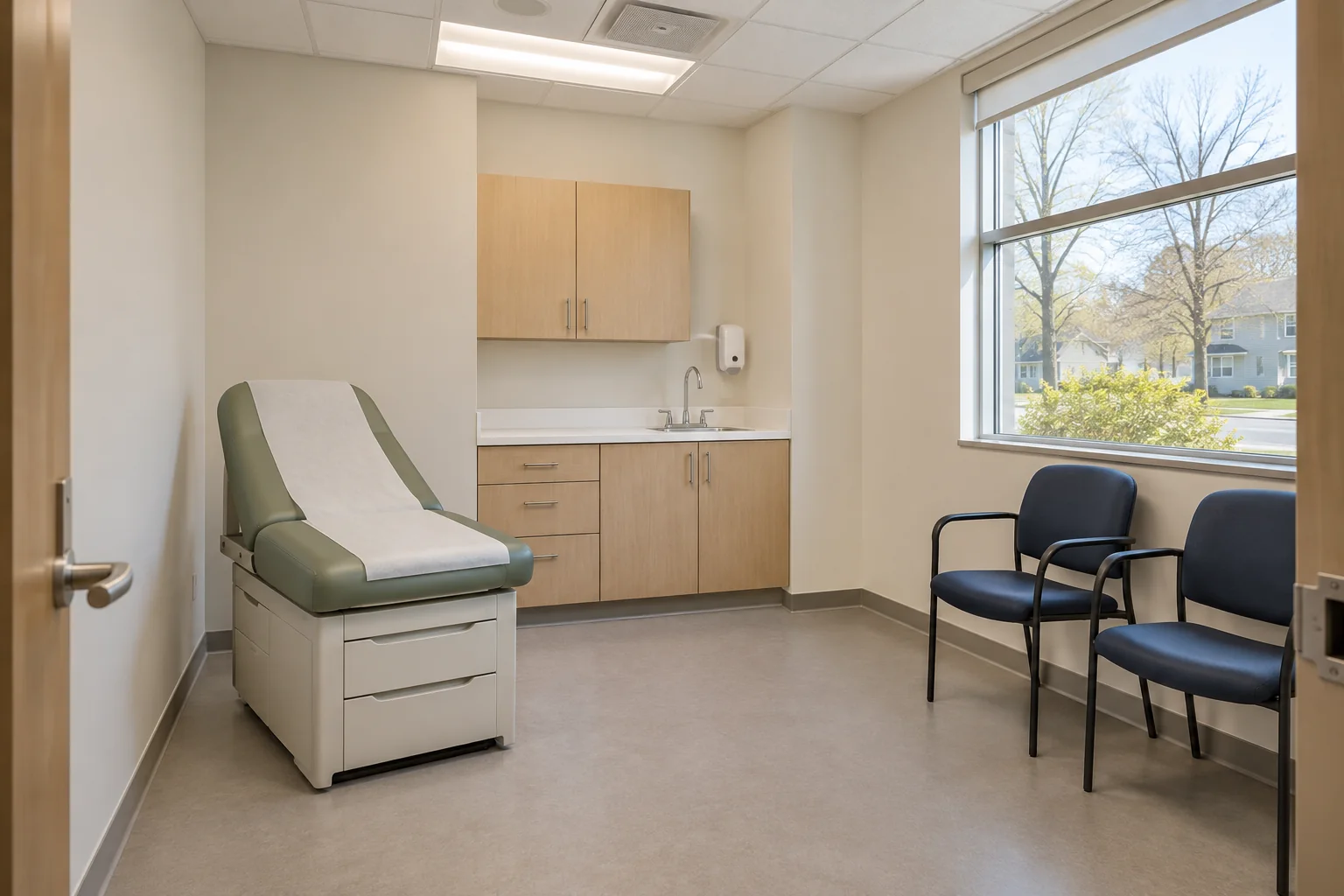
Exam, dental and treatment-adjacent rooms need an explicit environmental scope and a room-release process set with the practice.
Who handles clinical equipment and between-patient turnover? Instruments, sharps, regulated waste and blood spills are outside the routine janitorial scope.
03 / STAFF & SUPPORT AREAS
Staff offices, break areas, restrooms and common spaces, with tasks and frequency written for how the rooms are used.
Identify restricted closets, supplies, food areas and waste streams. Clinical utility, sterilization and medication areas need separate authorization and scope review.
This is a planning guide, not a record of room readiness. The practice confirms its protocols, cleaning frequency and responsibilities before service begins.
SCOPE BOUNDARIES
Clear assignments help the practice and cleaning team know what to do, what to leave alone and whom to contact when a room needs attention.
List rooms, accessible surfaces, floor care, ordinary waste and supplies. Specify which tasks belong to Oasis and which remain with facility staff.
Confirm the product, surface compatibility and facility protocol. Follow label preparation, dilution and wet contact time, along with any equipment instructions.
Clinical equipment, instrument processing, sharps, regulated waste, blood spills and isolation or terminal cleaning need separate responsibility and capability review.
Review task training, exposure controls, restricted areas and the facility contact for exceptions. A product’s registration does not certify a cleaning company or guarantee an infection-free facility.
SCHEDULES & ACCESS
After-hours routines, coordinated low-traffic windows and daytime support can be considered. Frequency comes from the room use, facility requirements and agreed scope, not simply the size of the office.
Recurring janitorial service does not replace between-patient cleaning assigned by the practice. Agree on who releases a room, who restores access and what happens when it is unavailable.
Explore the broader janitorial program ↗DOCUMENTATION & FOLLOW-UP
Agree on room checklists, inspection notes, issue reporting and review frequency. An exception should identify the room or area, the concern and the person responsible for follow-up.
Use photos only where the facility authorizes them. Keep patients, records, screen contents and identifying information out of service documentation.
Explore client access ↗FROM WALKTHROUGH TO ROUTINE
For medical offices, dental practices, urgent care centers, outpatient clinics and multi-specialty or multi-site practices. Each location keeps its own room and protocol requirements.
Review room types, patient flow, surfaces, restricted spaces and the practice’s priorities with the designated contact.
Write the scope, exclusions, approved products, access windows and responsibilities before confirming the staffing plan.
Follow the agreed room sequence and site protocols. Record inaccessible areas or requests that fall outside the scope.
Use the agreed checklists and inspection notes to discuss issues, changes in room use and any updates to the program.
Quote
An estimate needs more than square footage. The mix of patient, staff and shared spaces changes the work involved.
Room count, floor materials, environmental touchpoints, restroom use and clinical-task boundaries.
Cleaning frequency, available room windows, restricted access and any daytime support.
Site requirements, checklists, inspections, supplies and the agreed process for service exceptions.
Start with the practice address, room count, approximate area and service windows. If sharing photos, use empty rooms without patients or records.
Get medical cleaning pricingService areas
Service planning includes Worcester County, Metro Boston, Springfield, Hartford and New Haven corridors. Share the practice location so coverage and scheduling can be confirmed.
View service areas ↗FAQ
Planning references for responsibilities, product use and task-specific exposure controls:
Yes. Before-opening, after-hours and coordinated low-traffic windows can be reviewed with the practice. Room access, staffing and frequency are confirmed in the written plan; routine janitorial visits do not replace any between-patient cleaning assigned by the facility.
Medical offices, dental practices and urgent care locations can be reviewed under one coordinated program. Each location still needs its own room scope, approved surfaces, protocols and responsible contacts; a shared program does not make their clinical requirements identical.
The agreed scope can cover waiting rooms, reception, restrooms, staff and administrative areas, floors and specified environmental surfaces in exam or treatment-adjacent rooms. Ordinary waste and supply restocking can be included. Clinical equipment, instruments, sharps and regulated waste are not automatically included.
Room checklists, inspection notes and issue follow-up can be included in the program. Photo documentation requires facility approval and must avoid patients, records, screens and other identifying information. Agree on the reporting format, contact and review frequency during planning.
Yes. The plan identifies cleaning windows, restricted rooms, access procedures and who releases each area. Facility-specific protocols, task training and exposure controls must be reviewed before the work is assigned.
Identify the approved surfaces, product, intended use and responsible staff with the practice. When disinfection is included, follow the product label and surface or equipment instructions, including any preparation, dilution and required wet contact time. Product registration does not certify a cleaning company or guarantee an infection-free facility.
Instrument processing, sharps, regulated medical waste, blood or body-fluid spills and specialized isolation or terminal-cleaning tasks are outside the routine janitorial scope. They require a separate capability, training, exposure-control and responsibility review before any work is accepted. Clinical equipment responsibilities must also be assigned explicitly.
A CLEAR START
Bring the room list, service windows and priorities. We’ll work through the scope with your designated contact.