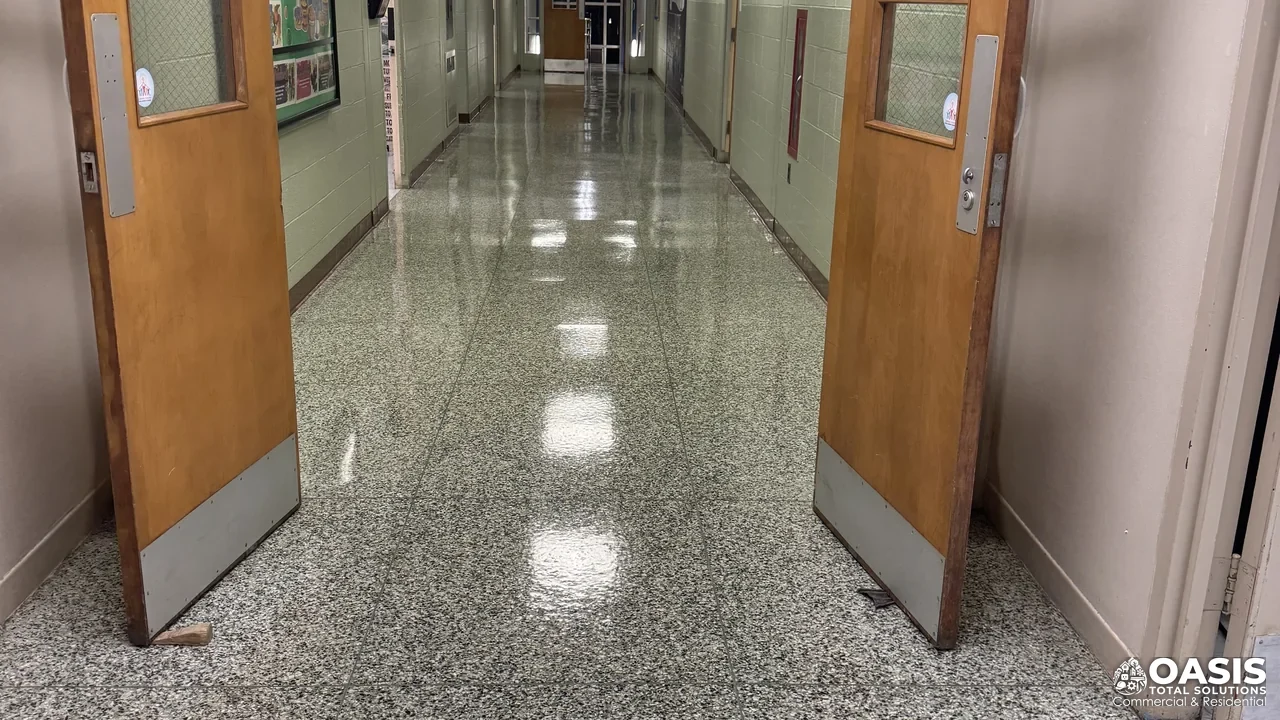
Schools & daycare
Build a summer cleaning scope around the rooms, floor finishes, access windows, and reopening date. This example shows what to decide before scheduling a school reset.
Review the planning example ↗Schools & daycare
A useful carpet-cleaning plan separates routine soil removal from stain treatment and makes drying time part of the schedule.
Review the planning example ↗Offices & campuses
Daytime cleaning works best when routine rounds, event requests, and urgent concerns have clear priorities.
Review the planning example ↗Schools & daycare
Plan around children’s absence, surface materials, product directions, and the center’s own reopening requirements.
Review the planning example ↗Retail & bank branches
Keep a common service standard while documenting what differs at each branch: traffic, layout, access, and frequency.
Review the planning example ↗Healthcare & dental
Separate floor maintenance from clinical operations and plan for the surfaces, treatment method, and return-to-use conditions.
Review the planning example ↗Healthcare & dental
A final clean should be scheduled after dust-producing work and before the practice’s own move-in and clinical readiness checks.
Review the planning example ↗Commercial facilities
Start with a task list that the property team and cleaning team can both use, then align the frequency and reporting with the building.
Review the planning example ↗Commercial facilities
A useful quote lets you compare the work, staffing assumptions, frequency, and exclusions behind the price.
Review the planning example ↗Offices & campuses
Group minor repairs by location, access, materials, and trade requirements before assigning a work window.
Review the planning example ↗Offices & campuses
A repaint plan needs surface preparation, access, ventilation, protection, and a clear sequence for returning rooms to use.
Review the planning example ↗Retail & bank branches
Balance the customer route, finish condition, installation or treatment method, and the time the floor needs before reopening.
Review the planning example ↗Light industrial & warehousing
Use the facility’s traffic patterns and shift schedule to plan painting, markings, minor repairs, and cleanup.
Review the planning example ↗Light industrial & warehousing
A marking project begins with an approved layout and a plan to keep moving equipment away from preparation, application, and curing areas.
Review the planning example ↗Light industrial & warehousing
Keep floor work, markings, and trade tasks connected through a written sequence and clearly assigned responsibility.
Review the planning example ↗Healthcare & dental
A clinical renovation needs more than finish selection. Access, dust controls, utilities, trade responsibility, and the facility’s requirements shape the plan.
Review the planning example ↗Offices & campuses
Use an organized intake to define the need, affected equipment, and shutdown constraints before the qualified electrical provider determines the work.
Review the planning example ↗Restaurants & hospitality
Define the repair, responsible trade, access window, and cleanup requirements before committing to a reopening schedule.
Review the planning example ↗Multifamily & managed properties
A turnover is easier to manage when repairs, finishes, and cleaning have separate scopes and a shared handoff plan.
Review the planning example ↗Multifamily & managed properties
Give each repair a location, description, responsibility, and completion check so the next step is clear.
Review the planning example ↗Multifamily & managed properties
Plan common-area work around residents, access, protected routes, and the finishes that need attention.
Review the planning example ↗