
Fixtures to floor edges.
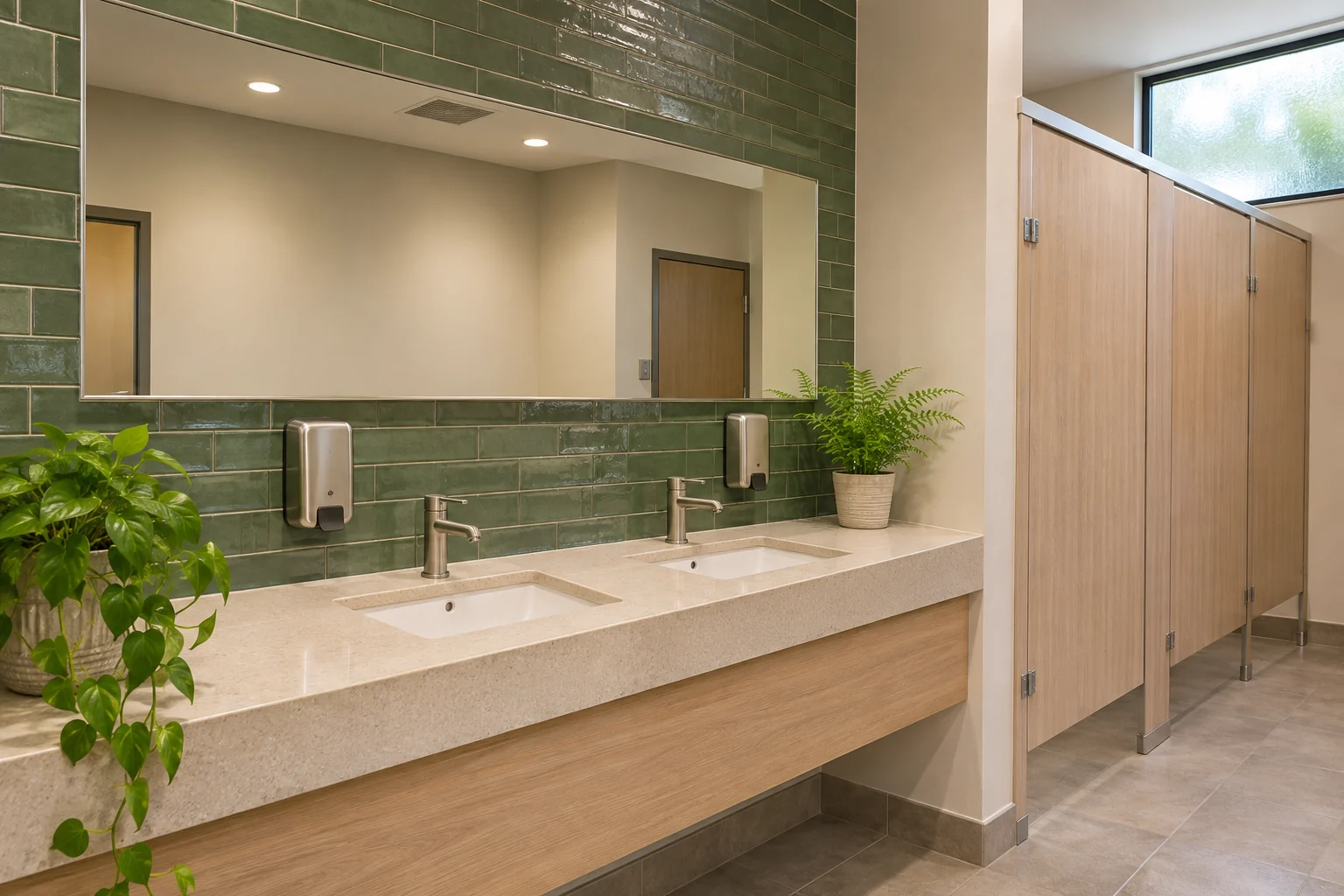
Fixtures, partitions, dispenser surrounds and reachable tile or grout buildup. Review finish condition, odor sources and whether repair is needed beyond cleaning.
COMMERCIAL DEEP CLEANING · MASSACHUSETTS & CONNECTICUT
Give built-up soil, overlooked edges and hard-working shared spaces the time they need. A focused plan for the work beyond your everyday routine.
LOOK CLOSER. PLAN BETTER.
Review the areas below. Build a short list of priorities to copy into your request or bring to a walkthrough. The final scope follows a review of your property.
THE SCOPE, MADE SPECIFIC
Deep cleaning is a detailed project scope. These are common areas to review, with the actual tasks and exclusions recorded before work begins.
Fixtures, partitions, dispenser surrounds and reachable tile or grout buildup. Review finish condition, odor sources and whether repair is needed beyond cleaning.
Sinks, counters, cabinet fronts, backsplashes and appliance exteriors. Interior appliances, food disposal and moving equipment need a separate agreement.
Door hardware, rails, switches and cleared shared counters. Define surfaces around electronics, documents and personal belongings before service.
Baseboards, corners, ledges, trim and reachable vent-cover exteriors. Internal ducts and high-level work are not assumed to be part of this scope.
Detail cleaning suited to the floor finish, including accessible corners and ordinary waste-station surrounds. Restoration and carpet extraction are reviewed separately.
Confirm completed areas, access exceptions and any remaining marks or repair needs. Agree on checklists and authorized photos before work starts.
Keep everyday upkeep with Office Cleaning, daytime rounds with Day Porter and finish restoration with Commercial Floor Care. Deep cleaning complements those scopes; it does not automatically include them.
THE RIGHT TASK FOR THE SURFACE
Detail cleaning addresses soil and buildup. Where disinfection is specified, the plan must identify suitable surfaces, products and label-directed preparation, application and contact time.
A general deep clean does not replace the specific procedures for clinical, food-service, manufacturing or childcare environments. Unknown contamination and hazardous materials need separate assessment.
FROM CONDITION TO CLOSEOUT
A seasonal detail visit, tenant move-in or planned inspection starts with the same practical questions. Confirm the work rather than assume a fixed quarterly schedule or an inspection outcome.
Walk the rooms, note surface finishes and distinguish removable soil from wear or damage. Discuss a test area where appropriate.
Agree on access, food and item clearance, equipment boundaries, signage and occupied routes. Schedule any phased or after-hours work.
Follow the agreed tasks and surface instructions. Flag inaccessible areas or unexpected conditions instead of silently expanding the work.
Check completion and return-to-use needs with the site contact. Use observed buildup and daily upkeep to discuss the next review.
Quote
Two properties of the same size can need very different work. A useful estimate connects the condition to the time, access and finish requirements.
Room count, usable area, buildup, fixtures and the detail level. Photos can help start the discussion; a walkthrough may still be needed.
Materials, safe reach, fixed equipment and restricted areas. Identify specialist treatments and anything outside the cleaning scope.
Occupied or after-hours windows, phased work, room reopening and the documentation your team needs for handoff.
Share the location, rooms and priorities you already know. We will review the details before confirming scope, scheduling and price.
Get deep cleaning pricingService areas
Discuss deep-cleaning work in Worcester County, Metro Boston, Springfield, Hartford, New Haven and Bridgeport-area commercial corridors. Confirm your location, service fit and timing with Oasis.
Explore service areas ↗FAQ
Clear expectations protect the property and help both teams agree on what a completed project looks like.
Routine janitorial covers everyday upkeep. Deep cleaning is a separate, detailed scope for accumulated soil, edges, fixtures and areas that need more time or access. It can complement an existing nightly cleaning program.
The written scope identifies the rooms, surfaces, tasks and limits. Common priorities are restroom fixtures and partitions, breakroom surfaces, floor edges, baseboards, reachable ledges and shared touchpoints. Disinfection, equipment movement and specialist work must be specified.
We can review after-hours, weekend or phased room-by-room service. Availability, access, signage, ventilation and the time needed before an area returns to use are confirmed during planning.
No. Cleaning and disinfection are different tasks. If disinfection is included, the plan identifies the surfaces and suitable products, with preparation, application and contact time following the product label. Facility-specific procedures still apply.
Some discoloration, worn finishes, damaged grout or odor sources require repair or a separate treatment. We review the condition and any suitable test area before promising a result.
There is no single interval for every building. Review recurring buildup, room use, the daily cleaning scope and available access. A move-in, seasonal change or planned visit can also be a useful time to assess detail work.
These are reviewed separately from an ordinary detail-cleaning scope. Floor finish restoration, carpet extraction, work at height, internal HVAC work, commercial kitchen exhaust and hazardous-material remediation require their own scope and suitable arrangements.
Share the facility type, location, approximate size or room count, priority areas, current condition and preferred access window. Note fixed equipment, restricted rooms and any documentation needed. A walkthrough may be needed before pricing is confirmed.
START WITH WHAT NEEDS ATTENTION
Tell us where buildup is returning, which rooms matter most and when the space is available.